If you’ve been told you have an ovarian cyst, or you’re experiencing pelvic pain and want answers, you’re in the right place. At Miami Women’s Center, our team is committed to helping you understand what’s happening in your body and what your options are. We take a thorough, compassionate approach to diagnosing and managing ovarian cysts so you can make informed decisions about your care with confidence, not fear.
Ovarian Cysts

How Ovarian Cysts Form and Why They Happen
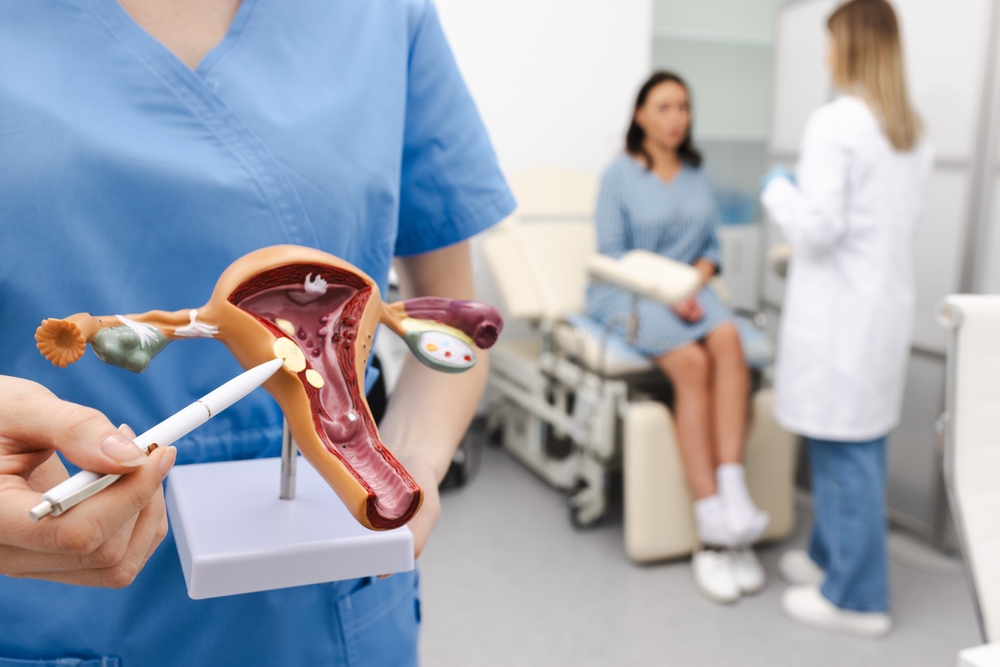
Ovarian cysts develop when fluid accumulates inside or on the surface of an ovary, forming a sac. The most common type, called a functional cyst, forms during the normal menstrual cycle when a follicle either fails to release an egg or doesn’t dissolve after ovulation. These typically resolve on their own within a few weeks to months and rarely cause serious problems.
Other types form for different reasons entirely. Endometriomas develop when endometrial tissue grows on the ovary, often linked to endometriosis. Dermoid cysts arise from cells present since birth and can contain unusual tissue like hair or skin. Cystadenomas form from cells on the outer surface of the ovary and can grow quite large. Hormonal imbalances, conditions like polycystic ovary syndrome (PCOS), and even previous pelvic infections can also create the conditions for cysts to develop.
Benefits of Ovarian Cyst Care
Accurate Diagnosis Guides the Right Treatment
Not all ovarian cysts behave the same way, and treating them shouldn’t be guesswork. A proper diagnosis using ultrasound imaging, blood markers like CA-125, and a full symptom review identifies exactly what type of cyst you have. That clarity determines whether you need watchful waiting, medication, or a procedure, saving you from unnecessary interventions and ensuring your care is appropriately matched to your condition.
Hormonal Health Gets the Attention It Deserves
Many ovarian cysts are directly tied to how your hormones are functioning. Conditions like PCOS or luteal phase defects can repeatedly trigger cyst formation if the hormonal root cause goes unaddressed. Evaluating and managing the hormonal factors behind your cysts means you’re treating the source, not just the symptom, which reduces how often cysts come back.
Minimally Invasive Options Mean Faster Recovery
When treatment is necessary, modern gynecologic care prioritizes approaches that are effective without being disruptive to your life. Laparoscopic surgery, for example, uses small incisions and allows most patients to return to normal activity within one to two weeks. You get the care you need without a lengthy recovery holding you back.
Tracking Changes Keeps You Ahead of Complications
Some cysts are harmless today but need to be watched over time. Regular ultrasound monitoring creates a detailed record of how your cyst is behaving, whether it’s shrinking, staying stable, or showing features that warrant closer attention. That ongoing picture gives your provider the information needed to act quickly if anything shifts.
Understanding Your Cycle Becomes Clearer
Ovarian cysts often surface alongside other menstrual irregularities such as heavy bleeding, missed periods, or mid-cycle pain that’s hard to explain. Investigating a cyst frequently uncovers broader patterns in your reproductive health that were previously overlooked. Addressing those patterns gives you a more complete picture of how your cycle works and what affects it.
How We Evaluate and Treat Ovarian Cysts
Why Choose Our Approach to Ovarian Cyst Care
When it comes to something as personal as your reproductive health, the provider you choose matters. Miami Women’s Center brings focused expertise in women’s health, which means every tool, protocol, and conversation is designed specifically for patients like you. We understand that receiving a cyst diagnosis can feel overwhelming, and we prioritize clear communication so you always understand your condition and your choices.
Our approach blends clinical precision with genuine compassion. We don’t rush through appointments, and we don’t dismiss symptoms that feel unclear or hard to describe. From your first visit through your final follow-up, you’ll work with a team that treats your health with the attention it deserves. Whether your cyst resolves on its own or requires treatment, you can trust that you’re receiving evidence-based care from providers who are truly invested in your well-being.

A Clear Diagnosis Starts With One Appointment!
Pelvic pain, irregular cycles, and unanswered questions about your health deserve more than a wait-and-see response. A thorough evaluation can identify what type of cyst you have, rule out more serious concerns, and give you a clear path forward. Our team at Miami Women’s Center is here to provide the focused, attentive care your reproductive health requires. Book your appointment by phone at 786.931.6067; we’re ready when you are.

FAQs
What size of ovarian cyst is dangerous?
Most ovarian cysts smaller than 5 centimeters are considered low-risk and often resolve on their own with routine monitoring. Cysts larger than 5 to 10 centimeters are more likely to require medical attention, particularly if they’re growing, causing symptoms, or have complex features on imaging. Size alone doesn’t determine risk; the type of cyst and your symptoms are equally important factors your provider will evaluate.
What causes ovarian cysts in young females?
In younger women and teens, ovarian cysts most commonly develop as part of the normal menstrual cycle. These are called functional cysts and are generally harmless. Other causes include polycystic ovary syndrome (PCOS), endometriosis, or hormonal imbalances that affect how the ovaries release eggs. A thorough evaluation helps identify the underlying cause and whether any additional treatment or monitoring is needed.
What does ovarian cyst pain feel like?
Ovarian cyst pain is often described as a dull, aching pressure or fullness in the lower abdomen, usually on one side. Some women experience sharp or sudden pain if a cyst ruptures or causes the ovary to twist, a condition called ovarian torsion that requires immediate medical attention. Pain can also flare during your period, during sex, or after physical activity, which is a good reason to discuss your symptoms with your provider.
Can ovarian cysts cause infertility?
Most ovarian cysts do not affect fertility, particularly functional cysts that resolve on their own without treatment. However, cysts caused by endometriosis or those associated with PCOS can interfere with ovulation and make conception more challenging over time. Early diagnosis and appropriate management are key to protecting your reproductive health if you’re planning to get pregnant now or in the future.
How fast do ovarian cysts grow?
The growth rate of an ovarian cyst depends largely on its type. Functional cysts often appear and disappear within one to three menstrual cycles without intervention. Other types, such as endometriomas or dermoid cysts, tend to grow more slowly but can enlarge over months or years if left unmonitored, which is why regular follow-up imaging is an important part of any ovarian cyst management plan.